


Thursday, December 26, 2013
A Throwback Thursday Video
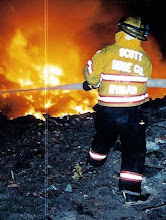
A fire from Chapter 16 of Fire Men: Stories From Three Generations of a Firefighting Family.

Saturday, December 7, 2013
A New Way of Training: Changing How We Think
Just
about two weeks ago, I had the great opportunity to discuss fire service
training on the Fire Engineering radio show hosted by Chief Dennis Rubin along
with Chiefs P.J. Norwood, Jonathan Riffe, and Lieutenant Frank Ricci. The questions and discussions were thought
provoking. For myself, I tried to
concentrate my comments beyond the day to day tactical training areas which,
while critically important, were covered exceptionally well by my fellow
participants. Instead, I tried to focus
on an area I see as under discussed—advanced education.
It’s
not sexy and certainly not as “fun” as live fire evolutions, firefighter
survival, or even the bread and butter practice of advancing lines or throwing
ladders. What it is, though, is critical
for the “business” of the fire service.
The
importance of lifelong learning cannot be over emphasized. The next generation of fire service leaders
will be confronted with a spectrum of problems only some of which we can imagine. Others will reveal themselves over time. Managing the “all hazards” response agency
that fire departments have become in a continuing era of increasing demands and
highly pressured financial resources will need a new problem solving
paradigm. This won’t come about by
simply repeating what we’ve done in the past, as good as it may have been. It will require a new generation of strategic
multi-dimensional thinkers. The military
has understood this for decades, sending officers for advanced degrees in a
multitude of disciplines at “civilian” universities.
I’ve
argued before, college level classes, particularly in the humanities, won’t
teach you to handle a nozzle better, but if you let them, they will teach you
to think, to examine and solve problems differently. Problem solving, with the challenges of the
future, will be a skill of paramount importance.
A
thought process which looks at problems from a historical perspective, from one
of engineering and mathematics, business and statistics, and puts all these
pieces together, will help bring new and innovative solutions to the
forefront. The catch phrase “thinking
outside the box” is easy to say, but much harder to do. Non fire related classes teach some of these
alternative problem solving methods, how to look at issues from other
directions and perspectives—essentially a new and different way to think.
The
next generation of leaders will need not only to be great firefighters and
command officers; they will need to be outstanding writers, politicians,
accountants, business managers, and strategic planners.
Friday, November 8, 2013

Sunday, October 27, 2013
Upcoming Radio Show Appearance...
Hosted by Chief Dennis Rubin......
"Please join me for the next "Contemporary Issues in the Fire - Rescue Service on Fire Engineering Blog Radio. We "Go Live" on Monday, November 11, 2013 at 7:30 pm (Eastern Time Zone). The topic for my November 11th Fire Engineering Blog Radio Show will be "Tips, Tricks & Pitfalls of Fire-Rescue Service Training & Education".
We have an amazing cast of presenters for the show on the 11th. Appearing live and in person will be Chief Paul Norwood (CT), Chief Jon Riffe (MD), Chief Gary Ryman (PA) & Lieutenant Frank Ricci (CT). I will be personally honored to be your host and moderator. Has my Mother always told me, I am the man with the "Face for Radio". Please call-in and let's chat about training issues.
So, please tune-in and listen to the best in the business talk about all aspects of training presentations to include textbook development, DVD programing and much more! Be there or Be Square - See you on the Radio my friends. Until next time please be safe out there!"
We have an amazing cast of presenters for the show on the 11th. Appearing live and in person will be Chief Paul Norwood (CT), Chief Jon Riffe (MD), Chief Gary Ryman (PA) & Lieutenant Frank Ricci (CT). I will be personally honored to be your host and moderator. Has my Mother always told me, I am the man with the "Face for Radio". Please call-in and let's chat about training issues.
So, please tune-in and listen to the best in the business talk about all aspects of training presentations to include textbook development, DVD programing and much more! Be there or Be Square - See you on the Radio my friends. Until next time please be safe out there!"
Sunday, October 6, 2013
Memorial Weekend
A brick with the names of the three generations will be placed in the Memorial Walk of the National Fallen Firefighters Memorial. Giving "Generation 1" the certificate


Saturday, September 28, 2013
The Original Denis Leary
Today
we think of Johnny and Roy as an ancient historical portrayal of firefighters;
their all-American wholesomeness overtaken by more complex characters and
stories in Backdraft, Ladder 49, Rescue Me, and now Chicago
Fire. All of these, and the original
“Emergency” are but
Johnny-come-lately’s (pun intended) to the original and main theatrical
firefighter of American History.
Fireman Mose Humphreys was played by
actor Frank Chanfrau in thousands of performances on stages throughout the
country in the 1840s and 1850s. Although
nine scripts were written, only one survives.
He became an urban folk hero; the personification of New York firemen
and to some degree, all volunteers of the day.

Mose was a cigar smoking, heavy drinking,
hard fighting, baby rescuing, rowdy fireman who stood for good against con-men,
crooks, and politicians. Think Denis
Leary before there was Denis Leary. The
working class of the day related to the character and stories as he protected
the community, rescued “damsels,” and fought the politicians. The middle class viewed him differently as a
symbol of societal unrest.

 In today’s world with the pervasive presence
of social media, you tube, and myriad other forms of entertainment, this past
history is interesting in showing that public perception being shaped by art is
not new. There was no actual Mose, but
his character was based—with obvious fictional liberties—on the characteristics
observed in firemen of the day. That a
fictional character influenced public debate and change in the fire services of
the day should be instructional to us.
Who is more real; Tommy Gavin or Johnny and Roy?
In today’s world with the pervasive presence
of social media, you tube, and myriad other forms of entertainment, this past
history is interesting in showing that public perception being shaped by art is
not new. There was no actual Mose, but
his character was based—with obvious fictional liberties—on the characteristics
observed in firemen of the day. That a
fictional character influenced public debate and change in the fire services of
the day should be instructional to us.
Who is more real; Tommy Gavin or Johnny and Roy?

The performances in the 1800s resulted
in something more than just entertainment.
They provided fuel for debates on fire department reform, particularly
in cities which experienced firefighter violence. While many historians today agree that the
early stories of firemen fighting each other on scenes were overblown and not
as widespread as legend has it, the instances which did occur were likely
magnified by the fictional portrayal.
Mose became a caricature, and as he grew in popularity, so did the
inaccurate perceptions that all firefighters were involved in violent behavior.
In today’s world with the pervasive presence
of social media, you tube, and myriad other forms of entertainment, this past
history is interesting in showing that public perception being shaped by art is
not new. There was no actual Mose, but
his character was based—with obvious fictional liberties—on the characteristics
observed in firemen of the day. That a
fictional character influenced public debate and change in the fire services of
the day should be instructional to us.
Who is more real; Tommy Gavin or Johnny and Roy? 
Sunday, September 15, 2013
Are We Better Off?
Not
long ago, I had one of those “solve the world’s problems” conversations with a
close friend of mine. We do this from
time to time and although we accomplish absolutely nothing, changing not a
thing, we both feel better at the conclusion.
Part of this particular chat covered a topic not new to us and one we’ve
“solved” before. The operative question
was “have the technological ‘improvements’ to fire apparatus actually resulted
in being able to better extinguish fires?”
Our
short answer to this burning question was “no.”
There is no question that today’s apparatus with the enclosed cab is far
safer and has gone some distance in reducing injuries and fatalities from the
days of open jump seats and riding the back step (getting dressed on the back
step wasn’t just crazy—it was stupid).
That, however, was not what we were talking about. It was more fundamental concept; that of
putting wet stuff on red stuff.
My
friend and I both started with engines without crosslays; back when all
pre-connects came off the back (one thing from the old days that seems to
slowly be regaining some favor). The
pump had two gauges. If two lines of
different lengths or sizes were in operation, the pump operator established his
pressure (yes it was always a him back then—no editorial comment intended) and
gated the other line down by experience and feel. Not the most accurate method, but it worked
well for generations. What the pump
panel didn’t look like was the cock pit of the space shuttle, which some of today’s
bear a striking resemblance to.
Individual
gauges? Love them. But flow meters, electronic valves, etc.
simply add more things to break. I won’t
even begin to talk about adding CAFS to the equation; a subject for another
day. Not needing a ladder to get up to
the deck gun was arguably an advantage of old versus new; and reaching hose
lines and ground ladders without having to climb another one.
Pumps
ran, lines and ladders were pulled, and fires went out in the old days. Simple has some attractive benefits. It breaks less often, is easier to maintain
and, arguably, to teach. I’m not
advocating a return to the open cab ’68 of yesteryear, but ask yourself
honestly if the fires are going out better, quicker, or easier with the
increased complexity of modern engines and if you’re honest, the truth is
obvious.
Subscribe to:
Posts (Atom)