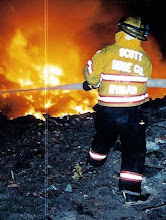
With "election" season fast approaching at many volunteer fire departments, I thought a revisit might be timely.
There are rules, and then there are rules. Here are some I've tried, not always successfully, to follow.
Ryman’s Rules: A Volunteer Chief’s Philosophy
1. You are responsible. You are responsible 365 days a year, 7 days a week, 24 hours a day. If you are there or 3,000 miles away. You are responsible. You can delegate authority, but not responsibility.
2. The chief is always right. Invite input, debate, etc. from the officers. However, once the decision is made, that’s it. In public, the officers must show solidarity.
3. The officers are always right. If an officer makes a decision you disagree with, in public or with the other firefighters, that decision was right. You talk about what you would have done differently in private.
4. Delegate, delegate, and delegate. You can’t be involved in every activity, nor should you be. Give the junior officers responsibilities and hold them accountable. If they follow through, give them more and more. If they don’t, let them know about it and don’t give them any additional work.
5. Try to develop a command presence. Your presence at an emergency should send a message to the firefighters that everything is going to be okay. Regardless of how badly something is going, try to maintain a calm exterior. Motivate your people. This is done differently for each individual. If you give an order or tell them to get into a building, they should totally believe that you believe they can do it. Never tell a firefighter to do something you wouldn’t or couldn’t do yourself. Chiefs give orders on incomplete information regularly. Even if you have doubts about it, give the order as if you are 100% confident about it. Your confidence is a force multiplier.
6. Let them have fun. Nobody is getting paid for this. The younger guys have to enjoy themselves. At the same time, know when to pull in the reins, and when you do, jerk them hard. They still have to be professionals. You can’t be their buddy anymore. You are the man, and they have to recognize it as such.
7. Pace of change. Keep them sullen but not mutinous. The pace of change has to be fast enough that the young guys see progress, but not so fast that the dinosaurs get riled up. As long as both groups are slightly unhappy, you’re doing fine.
8. Don’t be afraid to piss somebody off. If you’re not pissing somebody off once in a while, you’re not doing your job.
9. Encourage training certifications. Push the guys to get their Firefighter 1 and other certificates. The time is fast coming when what you are able to do, and what positions you can hold in a fire department virtually anywhere will be determined by these certificates. At the same time, work to keep things in perspective. Firefighter 1 or 2 does not equal “super firefighter”.
10. Develop junior officers. The greatest legacy a chief can have is by the officers he leaves behind.